|
FROM EXTENSIVE
ENTERPRISES MEDIA Tallahassee’s school speed cameras delivered 46,764 expensive lessons last fiscal year.
The city’s annual report provided fine-grained numbers on violations and revenue. Forty-eight cameras at 23 schools generated nearly $3.3 million in paid notices and traffic citations. Tallahassee kept about $1.4 million after distributing the rest.
One number especially caught Commissioners’ attention. Police said about 57% of the notices were issued when the school-zone lights were not flashing and the regular speed limit applied.
Those tickets were still issued during the school day, as Florida law permits, and only to vehicles traveling more than 10 mph above the regular limit. But the figure helps explain why some drivers view a school-safety program as a speed trap with a syllabus.
Mayor Jeremy Matlow, who said he had been ticketed as he accelerated at the edge of a school zone, put the limits of automated enforcement more bluntly: “A sworn officer seeing that probably would let me go, but a camera seeing my bumper hit 26 miles per hour right when I’m at the line seems frankly unreasonable.”
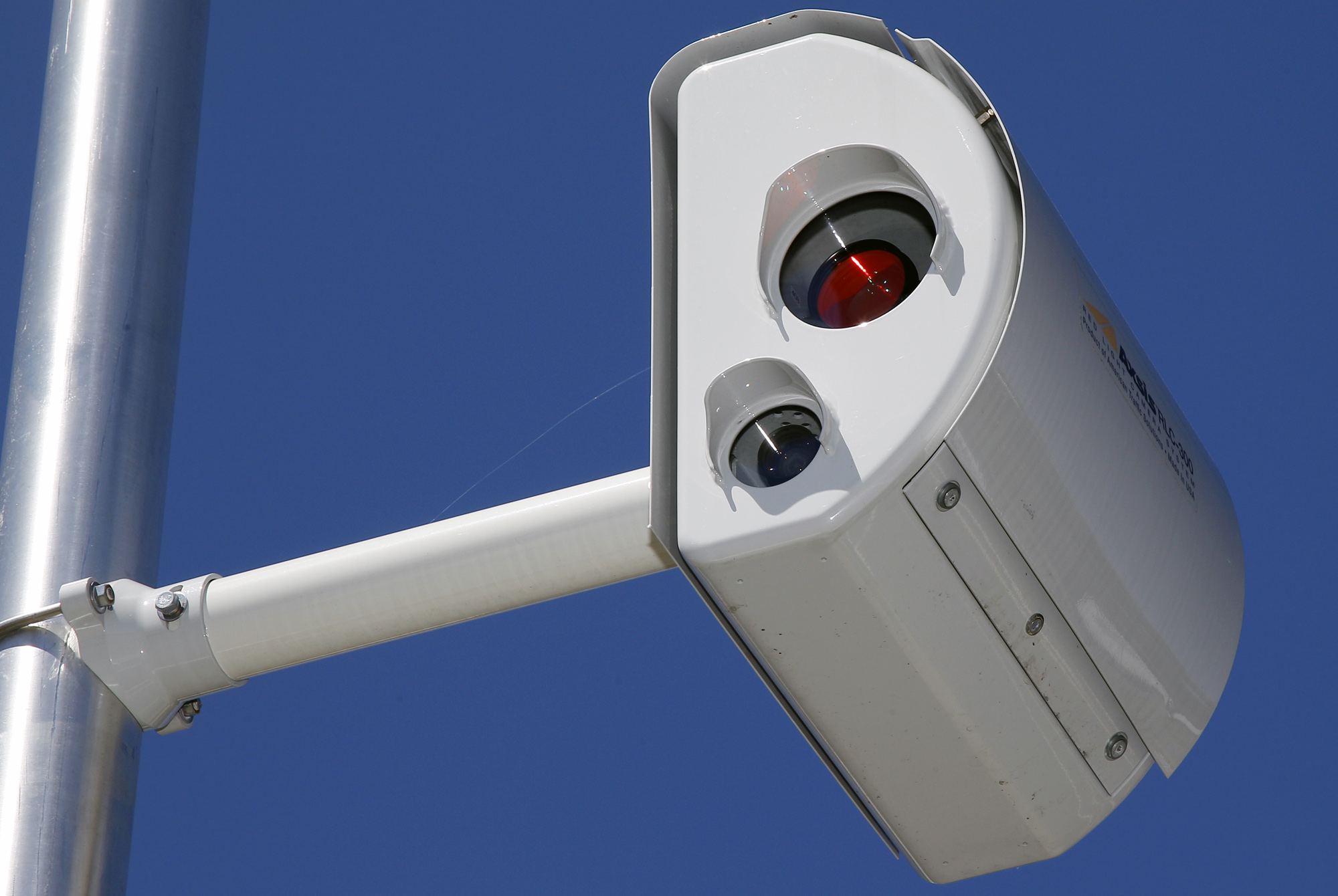
Tallahassee’s school-zone cameras collected millions, but Commissioners want proof the program makes the grade on safety.
While the report counted notices, payments and revenue down to the dollar, it said little about whether the cameras were earning a passing grade on their actual assignment.
“Can we definitively demonstrate that these cameras are actually making these streets safer?” Commissioner Jack Porter asked during the hearing.
Police Chief Lawrence Revell said he didn’t bring the crash count analysis with him but could bring it back later. The Commission may not dock letter grades for late work, but the missing data didn’t inspire confidence.
Commissioners ultimately voted 4-1 to have staff examine narrower enforcement hours or outright cancellation of the program, along with the financial consequences and data from individual locations. Commissioner Curtis Richardson dissented.
Public trust in camera enforcement is thin. Leon County abandoned its planned school-zone system; Tallahassee suspended its Flock network; and Florida ordered automated plate readers off state roads.
Different cameras, remixed sales pitches. Public enthusiasm remains beyond the reach of even a 70-200mm f/2.8.
___
Coming up, the usual assortment of news, intel, and observations from the week that was in Florida's capital city by Peter Schorsch, Drew Wilson, Drew Dixon, Liam Fineout and the staff of Florida Politics.
But first, the "Takeaway 5" — the Top 5 stories from the week that was:
|
|
|
| |
Take 5 |
|
|
Gaveling order — Senate President Jim Boyd and House Speaker Sam Garrison have taken the gavels, and each told his chamber what the next two years are about. Garrison’s speech ran close to 1,900 words as prepared. He quoted his grandfather, a commissioned salesman (“When they say no, I hear yes”), and said he needs to try that line on Boyd. He closed by telling members “it is not our part to master all the tides of the world.” That is Gandalf, in “The Return of the King.” Any Speaker who works J.R.R. Tolkien into his first speech is all right by me. Boyd’s prepared remarks ran about half as long. They had no jokes and one story from home.
First Lady, first Chair — Gov.-elect Byron Donalds has selected the leadership team for his 2027 Florida Inauguration, the swearing-in of Donalds and Lt. Gov.-elect Bryan Ávila on Jan. 5. Donalds’ wife, Erika Donalds, and Ávila’s wife, Cindy Gil-Ávila, will serve as Inaugural Chair and Honorary co-Chair, respectively. Ed Miyagishima, who served as a senior adviser on Donalds’ campaign, will be Executive Director of the Inaugural. The inauguration theme will be “One Florida: A Celebration of the Florida Dream,” honoring Florida’s rich history, celebrating the people and communities that make Florida extraordinary and looking ahead to a positive future for every Floridian.
Cord Byrd takes flight — Secretary of State Byrd is leaving his role and heading to the private sector, POLITICO Florida first reported, and Florida Politics has confirmed. The Neptune Beach Republican will Chair the Board of the Association of State and Local Election Officials, with what he described as the “goal of helping train and educate election officials around the country on best practices in election administration.” “I want to encourage and help other states adopt much of what we have done in Florida with respect to timeliness of election results and overall restore trust in the election process,” Byrd told Florida Politics. He will be based in the Jacksonville area. The Board role won’t be his full-time job. He will announce his main position soon.
Déjà vu all over again — The Department of Management Services is a year behind on replacing Florida’s statewide government network. The contract it put back on the street in August is one the agency’s own consultants priced at $75.9 million more over a decade than the version it dropped in April. The procurement is MyFloridaNet-3, the successor to the private network that carries data, internet, and cloud traffic for state agencies, counties, cities, School Districts, universities, libraries, and eligible nonprofits. DMS estimates annual spend on the contract at about $60 million. The initial term is seven years, with a seven-year renewal available.
From statute to stucco — A 112-apartment community has opened in southern Miami-Dade, becoming what its developer says is Florida’s first housing project conceived and completed under the Live Local Act. Coral Gables-based Beacon Hill Development Group celebrated the opening of Beacon Hill at Princeton, with residents already moving into apartments starting at $1,850 per month. Every unit is reserved for households earning no more than 120% of area median income — the maximum rate Florida law uses to define workforce or affordable rent. That’s notable, as the Live Local Act requires developers to set aside only 4 in 10 units at that rate to be eligible for the law’s benefits. Beacon Hill CEO Matt Martinez said his firm is “especially proud” of exceeding that requirement.
|
|
 |
|
| |
More time for holidays |
|
|
State workers can breathe a sigh of relief and reach for a mug of hot cocoa.
On Monday, everyone’s favorite collegiate baseball player, Gov. Ron DeSantis, announced that state offices will close Nov. 25 and Dec. 23, 24 and 31 for the holidays.
That gives state workers the Wednesday before Thanksgiving and the Wednesday and Thursday before Christmas.
And Dec. 31 falls on a Thursday. A four-day weekend to start 2027.
“The First Lady and I want to thank Florida's state employees for their hard work and dedication to serving the people of our state,” DeSantis said.
“As we celebrate Thanksgiving and Christmas, we hope they have the opportunity to spend quality time with family and loved ones. We wish all state employees a happy, healthy, and blessed holiday season.”
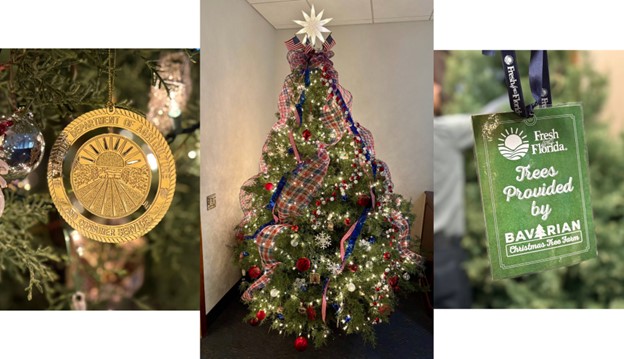
A few more days away from the office to enjoy what’s under the tree.
These extra days add to the state holidays on Nov. 26 and 27, Dec. 25, and Jan. 1.
So, book that flight back home, get ready for the NFL and college football rivalries, enjoy that Blackout Wednesday, and plop down on the couch to watch Anderson Cooper and Andy Cohen all day as the ball gets ready to drop. You’ve earned it, and the DeSantis administration wants you to have a stress-free, work-free holiday, too. (Well, outside the in-laws, of course. You’re on your own there.)
All we know is Ebenezer Scrooge surely wouldn’t approve of this!
|
|
|
| |
To boldly go ... |
|
|
You miss 100% of the shots you don’t take.
Florida has thrown its hat in the ring for the new United States Space Academy.
In the state’s opinion? Florida can build it faster, finance it for less and, most importantly, prepare the next generation for careers in space.
The proposal has two big pieces. With support from Embry-Riddle Aeronautical University and the Space University Research Consortium, the University of Central Florida could host the inaugural class in 2028. For the permanent campus, Florida proposes a 1,000-acre site at Kennedy Space Center, building on an existing NASA property agreement.
“Florida is the nation’s leader in space exploration and innovation, and we have the infrastructure, workforce, and proven track record to ensure America remains at the forefront of the space industry,” said Gov. DeSantis.
“From Cape Canaveral to our growing aerospace industry, Florida is where the future of space is already being built. The new Space Academy belongs in Florida, and we are ready to help prepare the next generation of Americans to lead our nation’s efforts in space exploration.”
Florida’s pitch also points to NASA’s existing security infrastructure and the commercial space companies already operating here.

The view from Florida’s proposed Space Academy comes with a launchpad on the horizon.
“Placing the new U.S. Space Academy in Florida simply makes sense. Our Space Coast has been the nation’s gateway to the stars since the beginning of the U.S. space program—placing the academy here means its students have a front-row seat to the new innovations coming out of both NASA and the private sector, giving them connections and experience they can’t get anywhere else. Why spend years and millions of dollars replicating what we’ve already built here? The U.S. Space Academy belongs in Florida,” stated U.S. Sen. Ashley Moody.
Florida has already invested more than $680 million in space transportation infrastructure. Beyond federal funding, Space Florida can finance and develop Academy facilities through lease-purchase agreements, ground leases, and public-private partnerships.
In the state’s view, those existing relationships make Florida the only place where civil, national security and commercial space operations already work together.
“Florida is where America goes to win the space race. The U.S. Space Academy will train the workforce that keeps our nation in the lead and create good-paying jobs for the Floridians who build our path to the stars. We already have the infrastructure and the partnerships to launch the next generation of aerospace leaders, and we're ready to do it again,” added Gov.-elect Donalds.
Watch the proposal and pitch videos.
|
|
 |
|
| |
Counterfeit pills, real fentanyl |
|
|
Attorney General James Uthmeier’s office has filed charges against two Ocala residents in connection with a suspected multicounty drug trafficking operation that involved selling counterfeit prescription pills containing fentanyl.
The investigation involved Uthmeier's Office of Statewide Prosecution along with officials from the U.S. Drug Enforcement Administration (DEA) and other agencies. JaMaries Johnson and Jerniesha Walls are each charged with trafficking in 28 grams or more of fentanyl. The first-degree felony charge could bring a 25-year mandatory minimum sentence and a $500,000 fine.
Johnson also faces charges of possessing a firearm as a convicted felon and trafficking-related counts involving other substances.
“These defendants manufactured and sold deadly counterfeit pills designed to look like legitimate prescription medication, and they put a child in the vehicle during one of their deliveries,” Uthmeier said in a press release.
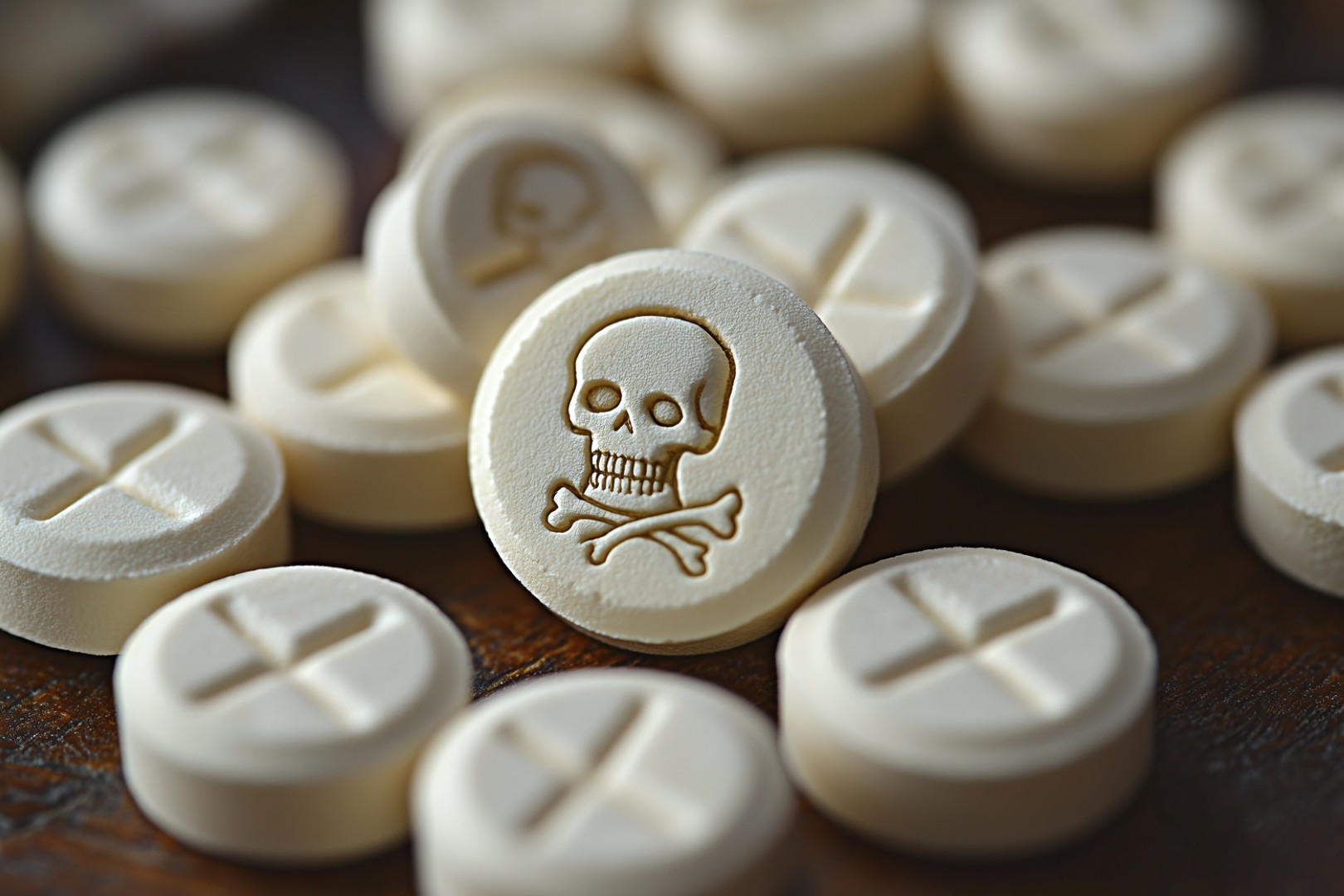
Investigators say pills sold as oxycodone contained fentanyl.
“Fentanyl is a poison that destroys lives and families. Through the outstanding work of our law enforcement partners, we have taken these traffickers off the streets, and they now face the full force of Florida’s mandatory minimum sentences.”
According to the release, investigators conducted a controlled purchase of 35 grams of suspected fentanyl pills from Johnson on Sept. 23. On Oct. 22, undercover investigators bought 201.9 grams of the same counterfeit pills, stamped to resemble prescription oxycodone, in Pasco County. Walls drove Johnson's vehicle during that transaction with an unrestrained child in the back seat.
On Oct. 29, investigators made a final purchase and executed a search warrant at a residence in Ocala. They found pills and other substances, four firearms, two pill presses and related paraphernalia. Johnson was arrested at the residence. Florida Highway Patrol troopers stopped Walls the same day as she drove Johnson's Range Rover, and more pills were found in the vehicle.
|
|
|
| |
Cold case thaws |
|
|
Attorney General Uthmeier announced that his office has charged four people in a 2013 kidnapping and murder in Central Florida.
Uthmeier’s Office of Statewide Prosecution filed 10 charges against each suspect. Uthmeier said 50-year-old Carlton Leon Williams, 35-year-old Sean Quentin Daniel Cosby Davis and 35-year-old Derrick Linell Dean, all of Orlando, and 42-year-old Nathaniel Webster of Altamonte Springs allegedly took part in the abduction and killing of Jim Johnson Jr. in December 2013.
“After more than a decade, justice is finally coming for Jim Johnson Jr. and his family. This was not a random act of violence — it was a planned kidnapping and home invasion robbery that was carried out by a criminal enterprise and ended in murder,” Uthmeier said.
“Through the outstanding work of Detective David Nutting of our Cold Case Investigation Unit, Cold Case Detective Michael Fields of the Orlando Police Department, and our law enforcement partners, these defendants are being held fully accountable. In Florida, we will never stop pursuing violent criminals.”

James Uthmeier at an earlier cold-case briefing. Four men now face charges in the 2013 killing of Jim Johnson Jr.
The case had received attention from the nonprofit Project: Cold Case archive that featured Johnson's murder as recently as August.
Johnson was kidnapped from Goolie’s Barber Shop on Dec. 6, 2013, a news release said. Witnesses told authorities he disappeared from the rear of the business about 9:15 a.m. that day. Bloodstains were found near where his vehicle had been parked.
Law enforcement investigators connected the kidnapping to a violent home invasion robbery where another victim was shot in the leg and a safe containing cash and other valuables was emptied.
On Dec. 11, 2013, Johnson’s body was found in a Daytona Beach wooded area, and the case was ruled a homicide. How he was killed was not included in the news release.
The charges include first-degree felony murder, kidnapping, two counts of grand theft of an automobile, armed kidnapping, armed burglary of a dwelling with assault or battery, armed robbery with a firearm, aggravated battery with a firearm, unlawful use of a two-way communication device and racketeering. TO SEE MORE TAKAWAYS FROM TALLAHASSEE CLICK HERE | | |


No comments:
Post a Comment
Note: Only a member of this blog may post a comment.